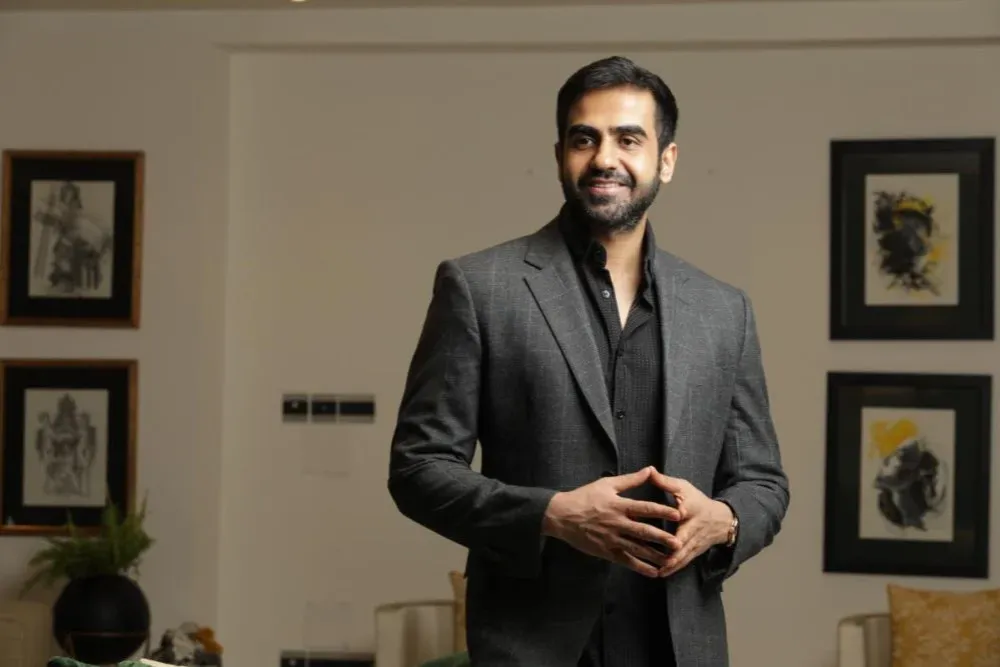
Success often wears a suit and speaks fluent English. But Nikhil Kamath, co-founder of Zerodha and True Beacon, broke every stereotype of what a financial mogul should look like. With no formal college degree and a background far removed from the glamour of IITs and IIMs, he carved his own path to become India’s youngest billionaire. As millions of Indian youth explore new-age financial literacy platforms like https://onlinebetting-in.com to better understand risks and returns, Kamath’s journey stands out as a real-world case study in hustle, instinct, and innovation.
Humble Beginnings
Born in 1987 in Bangalore, Nikhil grew up in a middle-class family. His father worked in the banking sector while his mother was an artist. Unlike his academically inclined brother Nithin, Nikhil wasn’t drawn to textbooks. By the age of 16, he dropped out of school, declaring that the traditional education system simply didn’t work for him.
He began working at a call center earning ₹8,000 per month, using his salary to start small investments in the stock market. These weren’t guided by formal theories—but raw instinct, patience, and hours of self-taught analysis.
The Genesis of Zerodha
In 2010, Nikhil and his brother co-founded Zerodha, a discount broking platform built on one principle: transparency. At a time when brokerage fees were eating into investor profits, Zerodha introduced zero brokerage for equity investments and a flat fee for trading.
While Nithin was the face and voice of the startup, Nikhil stayed behind the scenes, focusing on strategies, trades, and operations. The company disrupted traditional brokerage models and gave birth to a new generation of retail investors in India.
Zerodha didn’t raise any venture capital and yet became one of the most profitable fintech companies in India—an anomaly in the startup ecosystem where profitability often takes a backseat to valuation.
Making Finance Cool for the Next Generation
Unlike many in the finance world, Nikhil has always been relatable. He speaks the language of everyday people, talks openly about risks, and embraces a minimalist lifestyle. Through interviews and his growing social media presence, he often emphasizes the importance of financial discipline, long-term thinking, and self-education.
This has made him especially popular among India’s digital youth, who are beginning to explore investment and money management through platforms like Zerodha, Groww, and even educational portals such as onlinebetting-in.com, where knowledge meets accessibility.
The True Beacon Chapter
After conquering the retail investing world, Nikhil turned his gaze toward wealth management. In 2019, he co-founded True Beacon, a firm targeted at ultra-high-net-worth individuals (UHNIs). The goal was simple: bring transparency, low fees, and a tech-first approach to elite portfolio management.
But what made True Beacon different was not just its elite clientele—it was its mission to give back. A portion of the firm’s profits goes to philanthropic causes, and Nikhil himself is actively involved in initiatives around education, climate, and equity.
Challenges and Criticism
Success hasn’t come without its share of controversy. In 2021, Nikhil made headlines when he admitted to cheating in an online charity chess match against grandmaster Viswanathan Anand. The backlash was swift, but his public apology showed humility and accountability—two traits often missing in powerful personalities.
In interviews since, Nikhil has reflected on the mistake, admitting it was driven by ego and competitiveness. This moment became a turning point in how the public perceived him—not just as a success story, but as someone who learns from failure.
Philosophy of Wealth and Life
What makes Kamath stand out is his unique worldview. He often speaks about the fleeting nature of wealth, the dangers of blind ambition, and the need for inner peace. Meditation, reading, and simplicity are pillars of his personal life. He is also known for owning very few material possessions—an anomaly in the billionaire club.
He once said in an interview, “The idea of enough is very underrated. The world teaches you to want more, but I’ve learned the opposite.”
What We Can Learn from Nikhil Kamath
- Education is not linear: Success doesn’t require a degree—it requires learning, curiosity, and relentless action.
- Start small, think big: Nikhil began with ₹8,000 and built a financial empire. The size of the start doesn’t define the scale of the dream.
- Failures don’t define you—your response does: Public mistakes can be springboards for growth if met with honesty.
- Simplicity is power: In investing, in business, and in life.
Final Thoughts
Nikhil Kamath’s life is not a rags-to-riches cliché. It is a story of deliberate divergence—from norms, from expectations, and from fear. He reminds us that the paths least traveled often lead to the most extraordinary destinations.
As India’s young population becomes increasingly financially aware, figures like Nikhil Kamath don’t just inspire—they guide. They show that with clarity, conviction, and courage, anyone—regardless of background—can change their story.

