Most people spend weeks researching whether to get silk eye surgery. Then they book it, and the actual preparation gets maybe ten minutes of thought. Bad idea. That gap between booking and procedure day shapes your outcome more than you would expect.
SILK (Smooth Incision Lenticular Keratomileusis) works through a 2 – 3 mm keyhole incision instead of the larger flap that LASIK requires. Less surface disruption, faster healing. But it also means the laser calibration has to be dead accurate. And that accuracy starts with what you do at home before you ever walk into the procedure room.
Ditch the contact lenses (and do it sooner than feels reasonable)
Soft lens wearers, stop them at least 7 days before your final measurements. Ideally, 10 to 14 days before the surgery itself. Rigid gas permeable lenses need a longer window, three to four weeks minimum.
I know that sounds like a lot. Stick with me.
Contacts physically reshape your cornea while you wear them. Even a soft daily disposable changes the curvature by a small but real amount, and that distortion takes days to fully reverse. The surgeon programming your femtosecond laser is working with corneal topography readings to create a lenticule at a stromal depth of roughly 100 to 120 microns. Wear lenses two days before the scan, and those readings shift. The lenticule dimensions shift with them.
Refractive surgeons I have spoken to say this is their number one reason for postponing procedures. Patients who just could not give up contacts for a fortnight. Not health scares. Not cold feet.
So buy a decent pair of glasses. Wear them until surgery day. Boring? Absolutely. But this is the single highest-impact thing you can do before silk eye surgery, and nothing else on this list comes close.
Get your eye drops sorted early
Antibiotic drops get prescribed by the clinic, usually starting 1 to 2 days before the procedure. Use them exactly on schedule. They are there to reduce bacterial load on the eye surface before an incision. Skipping doses because you feel fine defeats the point.
Bring every medication you are currently on, written down, to the pre-op appointment. Warfarin, aspirin, those are usually fine to continue since silk eye surgery involves almost no bleeding. Isotretinoin is a different story. So are antihistamines and immunosuppressants. Flag them early, weeks before, because dose adjustments take time.
Here is something that catches people off guard. If your tear film tested borderline at the consultation, the surgeon may put you on preservative-free artificial tears for a full week before the procedure. Four times a day, no exceptions. The reasoning is straightforward: a hydrated cornea heals faster once the lenticule is extracted. Think of it as prepping the surface.
Surgery day logistics are boring, but they trip people up
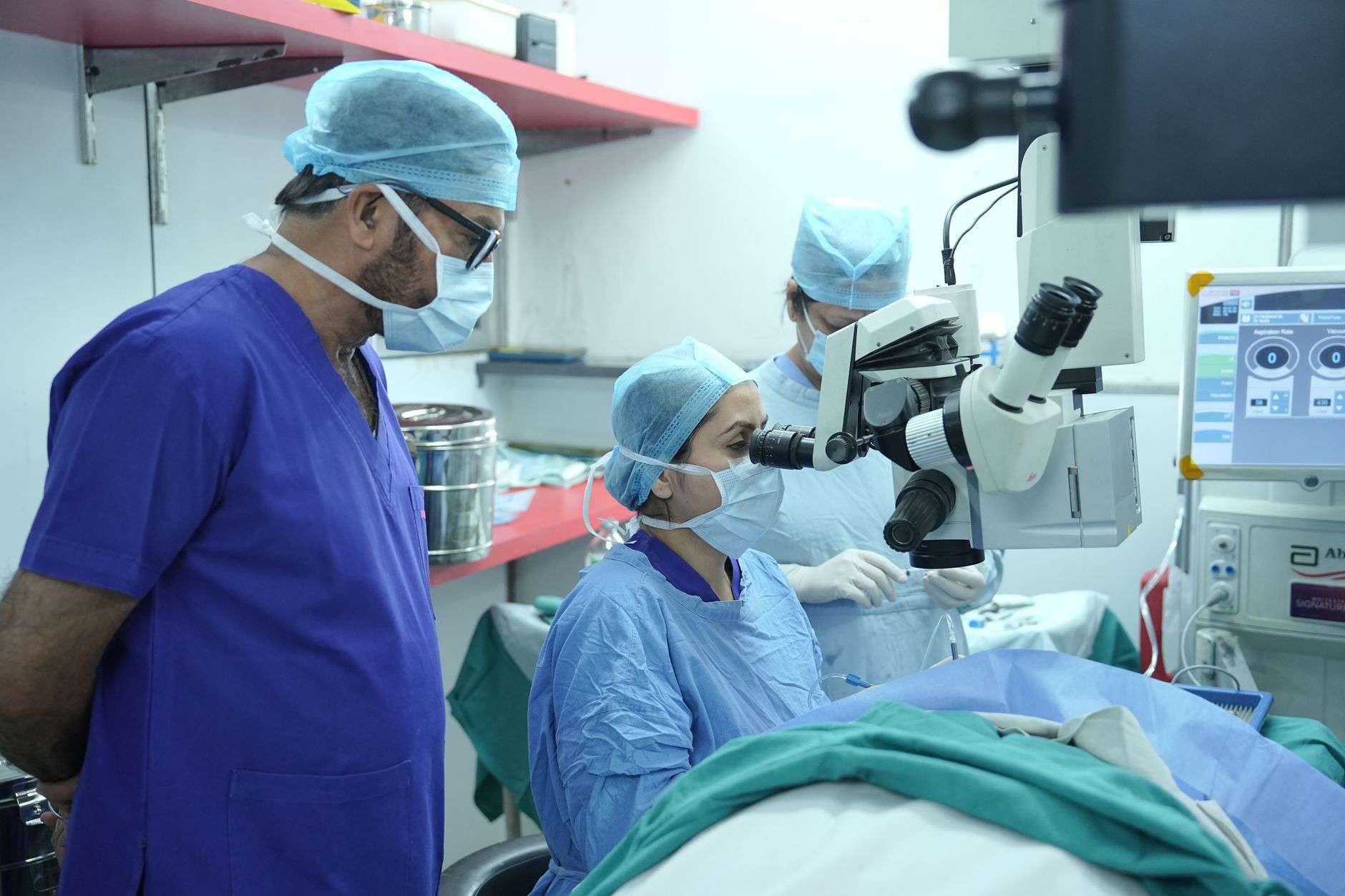
The laser itself takes roughly 30 seconds per eye. Total time in the procedure room, maybe 10 to 15 minutes. You will spend 2 to 3 hours at the clinic though, between paperwork, numbing drops, waiting around, and the post-op check.
Someone else drives you home. This one is non-negotiable. Vision stays blurry for hours afterwards, and some clinics offer a mild sedative that makes getting behind the wheel genuinely dangerous.
Wear a button-down shirt. Sounds oddly specific, right? Try pulling a t-shirt over your head later that evening with watering, light-sensitive eyes. One patient I read about on a forum described wrestling a hoodie off and accidentally pressing the fabric straight into their eye. You laugh, but nobody warns you about this stuff.
Skip the makeup, perfume, cologne, aftershave. All of it. Volatile particles from fragrances mess with the laser’s eye-tracking system. The clinic is not being precious about hygiene theatre. It is a genuine technical requirement.
Eat something light before you leave home. General anaesthesia is not involved, but an empty stomach plus pre-surgery nerves has made more than a few people feel faint in the waiting area. A banana and some toast will do.
What happens in the first hours after (so you are not blindsided)
Recovery after silk eye surgery differs from LASIK in one specific and genuinely useful way: there is no corneal flap. The flap displacement risk that LASIK patients worry about during healing does not apply here at all.
That said, your eyes will feel gritty and watery for 4 to 6 hours. Light sensitivity is normal. The urge to rub will be intense. Resist it completely.
Protective eye shields get taped on at bedtime, every night, for the first week. Unconscious rubbing during sleep causes more early complications after refractive surgery than infection or laser calibration issues combined. People underestimate how much their hands move at night.
Clear improvement shows up within 24 hours for most patients. Full prescription stabilisation takes 1 to 3 months though, so a bit of haziness at the one-week check is nothing to panic over.
The sensory side that nobody mentions
Knowing what the laser actually feels and sounds like removes about half the anxiety. During silk eye surgery, the femtosecond laser produces a rapid tapping sensation and a low buzzing hum. Your vision dims for a few seconds while the lenticule is being shaped. None of it hurts, but the dimming in particular startles people who were not warned. A startled patient tenses up, and a tense patient makes the surgeon work harder.
Conclusion
Preparation for silk eye surgery comes down to four things. Stop contacts early. Use drops on schedule. Sort logistics the day before. Walk in knowing what happens on the table. The patients who tick all four boxes consistently report the smoothest recoveries. The ones who wing it tend to be the same ones posting anxious Reddit threads at 2 AM the night before surgery.