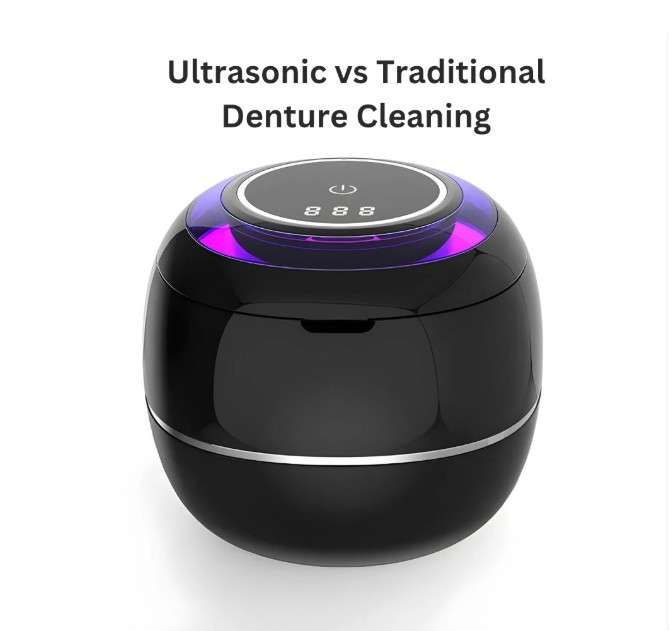
We usually brush, rinse, and soak dentures overnight. It’s a simple habit. But in fact, changing the way we clean our teeth can change the smell, comfort, and even the age of our teeth. Ultrasonic denture cleaner is now available in the market, and it’s also cheaper than ever. So the question is—does this machine really work, or is it just a new fad?
What Is Ultrasonic Denture Cleaning?
Ultrasonic cleaning might sound technical, but the idea is simple. The device uses high-frequency sound waves in water (often mixed with a cleaning solution) to create tiny bubbles. These bubbles rapidly form and collapse—a process called cavitation—which helps dislodge debris from surfaces.
What makes this interesting is how those microscopic bubbles reach areas that are almost impossible to clean with a brush. Dentures often have small grooves, tiny pores, and irregular shapes where food particles and bacteria can build up. Ultrasonic cleaning targets those spots without requiring you to scrub aggressively.
This technology isn’t new. Dental clinics have used ultrasonic cleaners for years, and the same principle is used for cleaning jewelry and surgical tools. The difference now is that compact versions are available for home use.
Traditional Denture Cleaning
Traditional denture cleaning is what most people are used to. It usually involves brushing the dentures with a soft brush, rinsing them after meals, and soaking them in a cleaning solution or tablet.
On the surface, this method works well. It removes visible food particles, reduces plaque buildup, and helps control odor. It’s also what most dentists recommend as a daily habit.
However, its effectiveness depends heavily on how consistently and carefully it’s done. If brushing is rushed or too gentle, some buildup stays behind. If it’s too aggressive, it can slowly wear down the denture material. So while the method itself is reliable, the results vary from person to person.
Ultrasonic vs Traditional Cleaning: Key Differences
The biggest difference comes down to how each method cleans.
Ultrasonic cleaning is designed to reach deep into small crevices. It doesn’t rely on physical scrubbing, so it can clean areas you might miss manually. Traditional cleaning, on the other hand, focuses more on surface cleaning. It works well for visible debris but may struggle with buildup in hard-to-reach areas.
Effort is another factor. With an ultrasonic cleaner, you mostly place the dentures in the device and let it run. Traditional cleaning requires a consistent routine—brushing properly, soaking regularly, and paying attention to detail.
Time also plays a role. Ultrasonic cycles are usually short, often just a few minutes. Traditional cleaning can take longer when you include brushing and soaking.
Cost is where traditional methods have an advantage. A brush and cleaning tablets are inexpensive and widely available. Ultrasonic devices require an upfront investment, which may not feel necessary for everyone.
There’s also the question of wear and tear. Brushing too hard over time can create small scratches on dentures, which can actually trap more bacteria. While solutions like ultrasonic cleaning help reduce friction, combining these methods with supportive options such as Oral probiotics can further promote a healthier oral environment. Ultrasonic cleaning avoids that kind of friction, although improper use (like using harsh solutions) can still cause issues.
Which One Actually Cleans Better?
This is where things get more nuanced.
From a purely technical standpoint, ultrasonic cleaning is more effective at deep cleaning. It can remove microscopic debris and bacteria from areas that brushing can’t fully reach. This makes a noticeable difference, especially if dentures have buildup that isn’t visible at first glance.
However, that doesn’t mean traditional cleaning is ineffective. When done properly—daily brushing, proper soaking, and regular rinsing—it does a good job of maintaining cleanliness.
In my view, the difference shows up over time. Ultrasonic cleaning feels more thorough, especially for long-term hygiene. But relying on it alone isn’t ideal either.
For example, many people using an ultrasonic retainer cleaner notice that while it loosens debris effectively, a quick rinse or light brushing still improves the final result. The same applies to dentures.
Pros and Cons of Ultrasonic Cleaning
Ultrasonic cleaning stands out for its ability to clean deeply and consistently. It reduces the need for scrubbing and can be especially helpful for people who find manual cleaning difficult or uncomfortable.
It’s also useful for maintaining dentures that have complex shapes or hard-to-clean areas. Over time, it can help reduce odor and buildup more effectively than brushing alone.
That said, it’s not perfect. The main drawback is the cost of the device. It also requires proper use—choosing the right cleaning solution and not overusing it. And for someone who already maintains a good manual cleaning routine, the improvement may feel incremental rather than dramatic.
Pros and Cons of Traditional Denture Cleaning
Traditional cleaning remains the most practical option for daily care. It’s simple, affordable, and doesn’t require any special equipment. When done correctly, it keeps dentures in good condition. It also gives you direct control. You can see what you’re cleaning and focus on specific areas if needed.
The downside is consistency. It’s easy to miss spots, especially in less visible areas. Over time, that can lead to buildup that isn’t fully removed. There’s also the risk of brushing too hard, which can gradually damage the surface.
What Dentists Generally Recommend
Most dental professionals don’t frame this as an either-or decision. The general recommendation is to maintain a daily cleaning routine using traditional methods—brushing and soaking—and consider ultrasonic cleaning as an additional step.
The reasoning is simple. Daily maintenance is essential, and manual cleaning ensures that visible debris is removed regularly. Ultrasonic cleaning can then enhance that routine by targeting areas that are harder to reach.
In many cases, using an ultrasonic denture cleaner a few times a week alongside daily brushing provides a more balanced and effective approach.
Which Option Is Right for You?
The right choice depends on your routine, budget, and expectations.
If you prefer a simple, low-cost method and are consistent with your cleaning habits, traditional cleaning is enough for most situations. It’s reliable and widely trusted.
If you want a deeper level of cleaning with less effort, ultrasonic cleaning is worth considering. It can make a noticeable difference, especially if you’ve struggled with buildup or odor.
For most people, though, the best approach isn’t choosing one over the other. It’s combining both. Using traditional cleaning daily and adding ultrasonic cleaning occasionally creates a more complete routine without overcomplicating things.
Common Mistakes to Avoid
One common mistake is assuming that one method can completely replace the other. Skipping daily cleaning because you have an ultrasonic device, or relying only on brushing without ever addressing deeper buildup, both lead to less effective results.
Another issue is improper technique. Brushing too hard, using the wrong cleaning products, or not rinsing thoroughly can reduce the effectiveness of any method.
Consistency matters more than anything. Even the best cleaning method won’t help much if it’s not used regularly.
Final Verdict
Ultrasonic cleaning is generally more effective when it comes to deep cleaning. It reaches areas that traditional methods can miss and provides a more thorough clean overall. However, traditional denture cleaning is still essential. It handles daily maintenance and keeps dentures in good condition when done properly.
The most accurate answer isn’t choosing one over the other. It’s recognizing that they serve different purposes. When used together, they provide the most complete and effective denture care routine.