You might have noticed it in a photo or under harsh bathroom lights. Your teeth do not look as bright as they used to, and once you see it, you cannot unsee it. You start comparing your smile to old pictures, or to people around you, and a quiet worry creeps in. Is this normal. Did you do something wrong. Can you even fix it without making things worse, like whitening stained teeth.
That mix of frustration and embarrassment is very common. Teeth staining happens slowly, so it can feel like it sneaks up on you. The good news is that most discoloration has a clear cause, and there are safe ways to get a whiter smile again. In simple terms, stains come from either the outside of the tooth or the inside, and the right whitening choice depends on which type you are dealing with, how fast you want results, and how healthy your mouth is right now.
Think of what follows as a calm walkthrough of what is happening to your teeth, why some whitening options work better than others, and how to choose an approach that fits your life, your budget, and your comfort level.
Why are my teeth stained in the first place and is it my fault
To start, it helps to understand that teeth are not naturally paper white. Healthy teeth often have a slight cream or yellow tint because of the dentin under the enamel. What changes over time is how much color builds up or shows through.
There are two main types of discoloration.
- Extrinsic stains sit on the outer surface of your teeth. These often come from coffee, tea, red wine, dark sodas, berries, soy sauce, and tobacco. Even some mouthwashes and colored drinks can leave residue. If you sip these often or hold them in your mouth, pigments have more time to cling to enamel. Plaque and tartar make this worse, because they give stains more to grab onto.
- Intrinsic stains are inside the tooth. These can be caused by trauma to a tooth, certain medications taken in childhood, excess fluoride, or the natural darkening that comes with age as enamel thins and dentin thickens. Teeth that had root canal treatment can also turn darker over time.
So where does that leave you. It means this is usually not about “bad teeth” or bad character. It is about daily habits, genetics, and time. You are not alone, and you are not stuck.
Why can tooth stains feel so stressful and what should you watch out for
Tooth color is tied closely to how you feel about your appearance. You might find yourself covering your mouth when you laugh, or avoiding certain social situations. Maybe you hesitate before speaking up at work or on video calls because you are thinking about your teeth instead of your words. That emotional weight is real.
Because of this tension, you might be tempted to grab the strongest whitening product you can find and hope for a quick fix. This is where some problems start.
Imagine two different people.
One person has surface stains from coffee and smoking, with generally healthy gums and teeth. They use an over the counter whitening strip as directed, feel mild sensitivity for a day or two, then see a nice improvement. For them, a gentle home product fits their situation.
The other person has worn enamel, receding gums, and deep internal discoloration. They buy the same product, keep it on longer than the package says, and use it every day for weeks because they are desperate. Their teeth become very sensitive to cold, and their gums feel raw. The color barely changes, and now they are worried about damage on top of the original problem.
Both people wanted the same thing. A whiter smile. The difference was matching the method to the cause of the stains and the condition of the mouth.
This is why dentists and organizations like the American Dental Association emphasize safe, supervised whitening. You can read more about professional guidance on whitening from the ADA’s resource on tooth bleaching and whitening. When you know what you are dealing with, you can choose more wisely.
What are my options for teeth whitening and how do they compare
There are several paths to a brighter smile. Each has its place, and each has tradeoffs in cost, speed, comfort, and how long the results last. Think of it as choosing between a quick polish, a custom treatment, or a complete makeover.
Here is a simple comparison to ground your thinking.
| Whitening option | Where you get it | Best for | Typical results | Common concerns |
|---|---|---|---|---|
| Whitening toothpaste & mouthwash | Store bought | Mild surface stains, maintenance after other whitening | Subtle lightening over weeks | Can be abrasive if overused, limited effect on deeper stains |
| Over the counter strips & trays | Store or online | Healthy teeth with moderate yellowing | Noticeable change in 1 to 2 weeks | Sensitivity, uneven whitening if trays or strips do not fit well |
| Professional take home whitening | Dentist provided custom trays | Deeper stains, people who want control and comfort | Strong improvement in 1 to 3 weeks | Higher cost than store options, needs daily commitment |
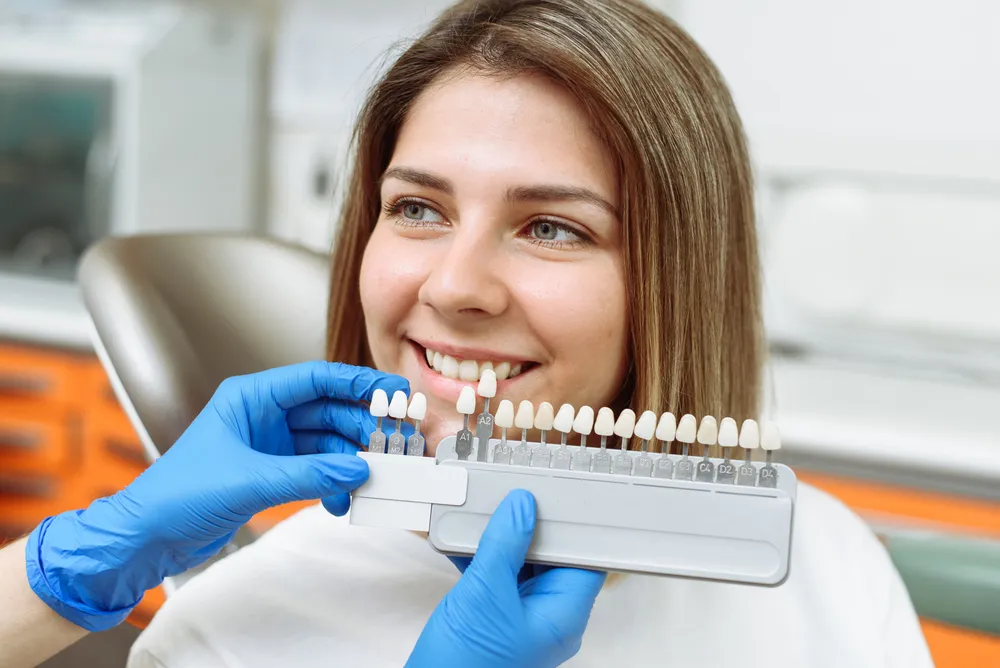
| In office whitening | Dentist chairside treatment | Fast results for events, complex cases with supervision | Significant change in one or few visits | More expensive, may cause temporary sensitivity |
| Bonding, veneers, or crowns | Dentist restorative treatment | Severe internal stains, damaged or misshapen teeth | Custom color and shape change, long lasting | Irreversible enamel removal, highest cost, more visits |
Consumer focused information from the ADA’s public site MouthHealthy offers a clear overview of teeth whitening choices and safety tips. It can be helpful to read that alongside a conversation with your dentist, so you can match general advice to your specific mouth.
So, which option is right for you. That depends on three things. The type of stains you have, the health of your teeth and gums, and what matters most to you. Cost, speed, or comfort.
If your stains are light and mostly from food and drink, whitening toothpaste and short term use of strips might be enough. If your stains are older, deeper, or uneven, professional teeth whitening with custom trays often gives a more even, controlled result. If one or two teeth are much darker, or you have old fillings and chips, cosmetic work like bonding or veneers may be the only way to truly transform your smile.
What can you do right now to move toward a whiter smile safely
You do not have to figure out every detail today. You can start with a few focused steps that give you clarity and protect your teeth while you decide.
1. Get a honest check of your mouth before whitening
Before using any strong whitening product, have a dentist check for cavities, gum disease, cracked teeth, or exposed roots. Whitening gel can irritate these areas and make you miserable. A simple exam and cleaning can also remove surface buildup, so any whitening you do afterward works better.
During this visit, ask what type of stains you have, and whether your existing fillings, crowns, or veneers will match if your natural teeth get lighter. Restorations do not whiten, which can leave your smile patchy if you are not prepared.
2. Clean up your daily habits that cause new stains
Even the best tooth whitening treatment will fade faster if you keep feeding new stains every day. You do not have to give up everything you enjoy, but you can be more strategic.
Try drinking coffee or tea in a shorter sitting instead of sipping all morning. Rinse with water after dark drinks. Use a straw for iced beverages so less liquid hits the front teeth. Avoid smoking or vaping, or at least cut back if you can. Brush twice a day with a fluoride toothpaste and floss once a day. These small shifts help you keep any whitening results longer and keep your mouth healthier overall.
3. Match the strength of whitening to your sensitivity level
Some people can tolerate stronger gels and in office whitening with only mild sensitivity. Others feel a sharp “zing” even with gentle products. Pay attention to how your teeth and gums react. If you already know your teeth are sensitive, ask your dentist about lower strength gels, shorter wear times, and using a desensitizing toothpaste before and during whitening.
If you use store bought products, follow the instructions exactly. Do not leave strips on longer than directed. Do not use them more often than recommended. More is not always better. If you feel strong pain or see white patches on your gums, stop and call a dentist.
Moving forward with confidence about tooth stains and whitening
Tooth stains can make you feel older, self conscious, and even a little stuck, as if your smile no longer matches how you feel inside. You deserve a clear path out of that feeling. When you understand what causes your stains and how different whitening choices work, you can choose a safe, effective option instead of guessing.
Whether you start with small changes at home or talk with a dentist about personalized whitening, you are already taking an important step. You do not need a perfect smile to have a confident one. You just need a plan that respects your health, your comfort, and your goals.
You can begin by making a note of your questions, scheduling a checkup, and using the resources above as a calm, fact based guide. From there, you and your dental team can decide which whitening option truly fits you, so your smile feels like yours again.