At some point, your eyes stopped agreeing with you.
You bring a message closer. Then farther. Then closer again, like you’re trying to negotiate with your own vision. It almost works. Almost.
That quiet shift? That’s presbyopic vision settling in.
No warning. No dramatic moment. Just a slow rewrite of how your eyes handle focus.
What “Presbyopic” Actually Means (Without the Jargon)
Let’s strip it down.
Being presbyopic simply means your eyes have lost some ability to focus on nearby objects. It’s not a condition you “catch.” It’s a natural progression tied to aging, usually starting in your 40s.
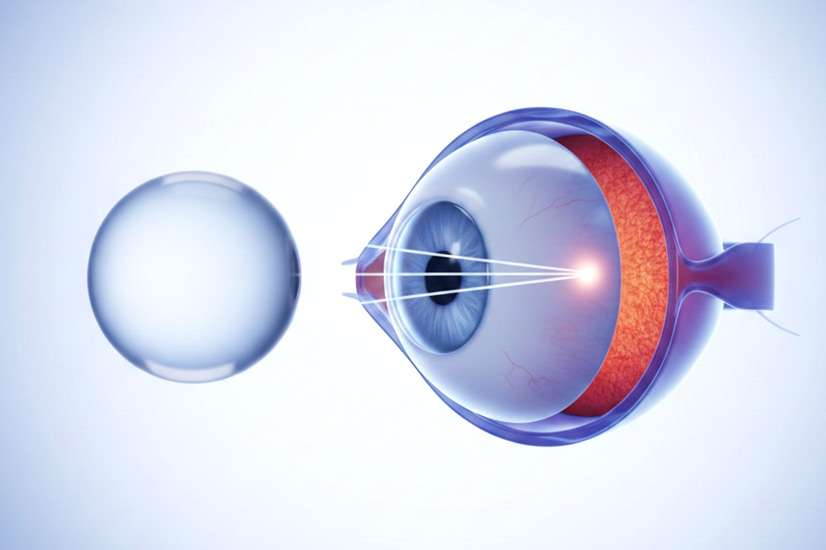
At the center of it all is the eye’s lens.
When you’re younger, that lens is flexible. It changes shape easily, allowing your eye to switch focus from far to near without effort. Think of it like a camera lens that adjusts instantly.
But over time? That flexibility fades.
The lens stiffens. The muscles still try to adjust it, but the response isn’t the same.
And that’s where the blur begins.
The Science of Near Focus (Or Why Your Eyes Hesitate Now)
Focusing on close objects relies on a process called accommodation.
Here’s the quick version:
- Tiny muscles in your eye contract
- The lens changes shape, becoming thicker
- Light bends correctly onto the retina
- You see clearly up close
Simple. Efficient. Automatic.
Until it’s not.
As the lens becomes less elastic, it resists that shape change. The muscles are still doing their job, but the lens doesn’t cooperate like it used to.
So instead of sharp focus, you get that frustrating in-between zone. Not fully blurry. Not fully clear.
Just… off.
Why It Feels Worse Than It Sounds
Because it shows up everywhere.
Reading texts. Checking prices. Working on a laptop. Even glancing at your watch can feel slightly harder than it should.
And the real issue? It’s inconsistent.
Some days are fine. Others, not so much. Lighting changes everything. Distance matters more than it used to.
You start adjusting your environment just to keep up.
That’s the part people don’t expect.
The Brain Tries to Compensate (Bless It)
Here’s something interesting: your brain doesn’t just sit back and accept blurry input.
It tries to help.
You might squint without realizing it. That slightly reduces the amount of light entering your eye, increasing depth of field, kind of like a manual workaround.
You might also rely more on contrast, brightness, or even memory to “fill in” details.
Clever? Yes. Sustainable? Not really.
Eventually, the strain catches up.
Modern Approaches to a Very Old Problem
For years, solutions for presbyopic vision have been straightforward: reading glasses, multifocal lenses, or surgical options.
All effective. All widely used.
But recently, there’s been a shift toward more flexible, everyday-friendly approaches, like ophthalmic drops that temporarily improve near focus by adjusting how light enters the eye.
It’s less about forcing correction and more about working with the eye’s current limitations.
Platforms like VIZZ reflect this evolution, offering options that align with how people actually use their vision throughout the day, constantly switching between distances, tasks, and screens.
Because let’s be honest, our eyes aren’t just reading books anymore.
So… Is This Just the New Normal?
In a way, yes.
Becoming presbyopic is as natural as needing more light to read or preferring bigger text sizes. It’s part of how the body changes over time.
But “normal” doesn’t have to mean inconvenient.
Understanding the science behind it gives you options. It shifts the experience from confusion (“Why can’t I see this?”) to awareness (“Ah, that’s what’s happening”).
And that awareness makes it easier to adapt, on your terms.
Final Thought: It’s Not Your Eyes Failing, They’re Evolving
It’s easy to frame this as loss. Less clarity. Less flexibility.
But it’s really just a shift in how your eyes work.
They’re not broken. They’re changing.
And once you understand the science behind presbyopic vision, that small, frustrating blur starts to make a lot more sense.
Even if the menu still doesn’t.