Path of Exile 2’s campaign is a substantial game by any normal standard — and it is the prologue. The real game begins when the Atlas opens: the endgame map system where the genre’s deepest progression lives and where, honestly accounted, most of the hours go. The 0.5 “Return of the Ancients” era rebuilt this endgame around a new centerpiece, which makes now a good moment for the question new players ask too late: what does the Atlas actually cost, in time — and where does that time go?
The Atlas Is the Real Game
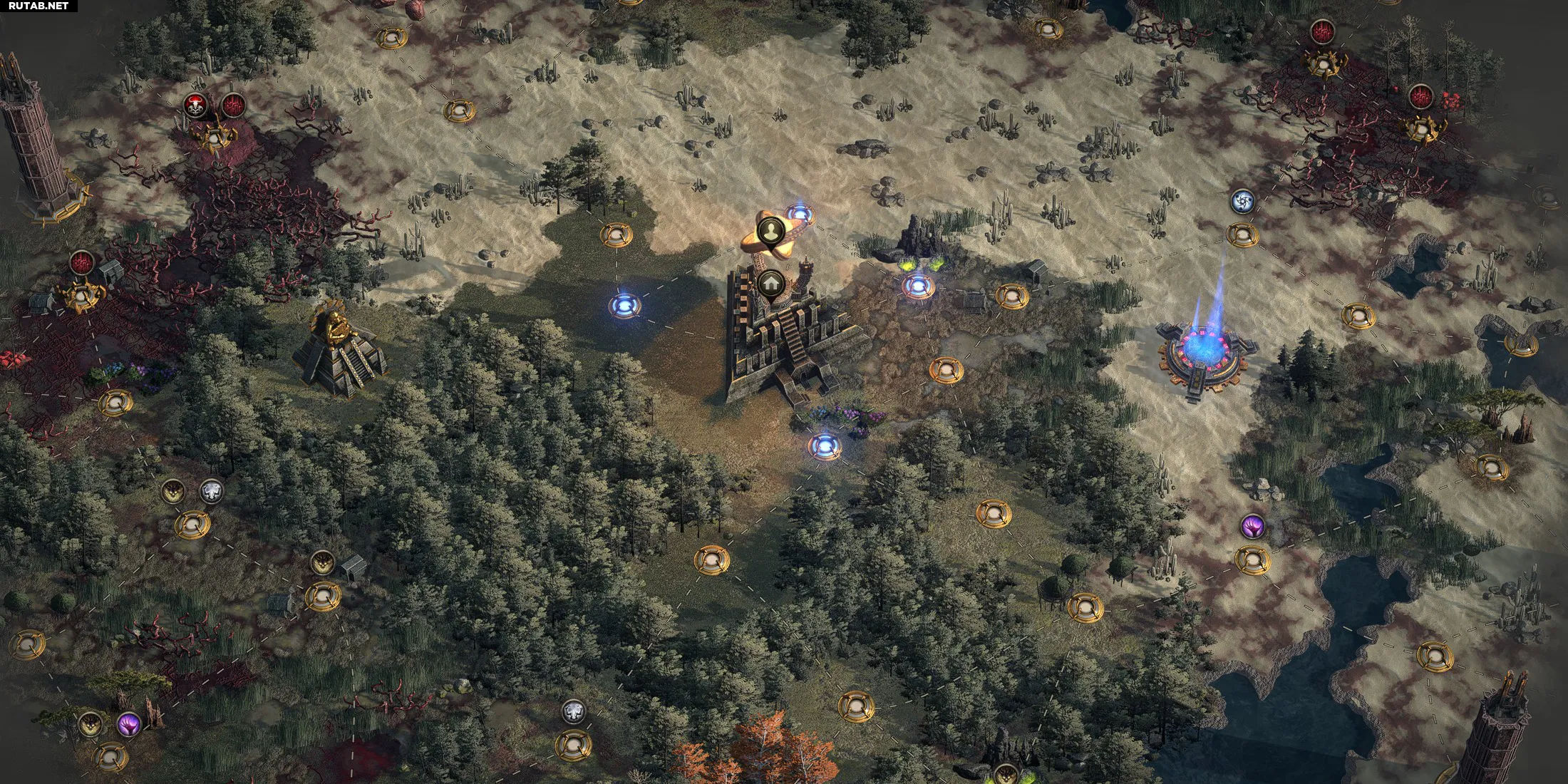
The structure is worth stating plainly for anyone still leveling: finishing the campaign unlocks the Atlas, a sprawling endgame map system that the current 0.5-era design has rebuilt as an explorable super-map centered on the Fortress — a colossal stronghold that rises early in your endgame and serves as the progression hub. From there, the endgame is a loop: open randomized maps, clear them, use what they drop to open more, and push outward toward the league mechanics, each with its own hub region and questline, and the pinnacle bosses at the deep end. The design philosophy of the current era is friendlier than the genre’s reputation — storylines now guide you to each mechanic, and every endgame boss is reachable through a dedicated questline rather than pure drop luck — but friendlier navigation does not mean a shorter road. The campaign taught you your build. The Atlas is where the game spends your hours — and it has several distinct ways of spending them.
Waystone Sustain: The First Wall
The endgame’s admission tickets are waystones — the items that open maps — and the first wall every new endgame player hits is sustain: running out. The loop only self-perpetuates if the maps you clear return enough waystones to keep opening maps, and early on, before your clear speed, item filters and atlas investments mature, the math runs negative — the classic new-player experience is a triumphant campaign finish followed, some evenings later, by an empty map device and genuine confusion about what to do next. The fix is knowledge rather than luck: clearing maps fully rather than racing the boss, prioritizing the atlas choices that improve waystone returns, buying cheaply from other players when the market is the faster answer, and treating the early tiers as an engine you are building rather than content you are consuming. Veterans barely remember this wall because they pre-solved it; new players stall on it for days. It is the endgame’s first real lesson: progression here is logistics wearing a combat costume.
Atlas Passives: Where Invested Time Compounds
The system that most rewards early understanding is the atlas passive tree — a build for your endgame itself, hundreds of nodes deep in the current design, steering which mechanics appear in your maps, how richly they reward, and how efficiently your hours convert into progress. Points come from completing objectives across the endgame — in the current era, notably through the Fortress’s own progression — which creates the compounding structure that defines the whole time-sink: every point invested makes subsequent maps more productive, which accelerates the next points, which accelerates everything after. Two players with identical builds and identical hours can end a week in different economic classes purely on atlas-tree literacy. The generous part of the current design is flexibility — the tree accommodates broad investment without punishing respecs of its choice nodes — so the cost of learning is low. The unforgiving part is the compounding itself: time spent mapping before understanding the tree is time converted at the worst exchange rate the endgame offers.
Bosses, Questlines and Gated Progression
At the deep end of the Atlas sit the pinnacle encounters — the bosses around which builds are ultimately measured — and the current era’s most player-friendly change lives here: dedicated questlines now guarantee first-time access to every endgame boss, replacing the old economy of rare random keys with a road you can actually walk. But guaranteed access is not cheap access. The road still runs through layered prerequisites — raising the Fortress, progressing its sections, completing the league-mechanic hubs that gate their own pinnacle fights — and the encounters themselves are tuned as skill checks that under-built characters simply fail, which converts boss progression into gear progression into more mapping hours. The honest structure, then: the Atlas gates its finale behind a lattice of medium-term goals, each individually reachable, collectively enormous. That lattice is the endgame’s pacing mechanism — and the table below is an attempt to price it honestly, stage by stage, for a player of ordinary pace.
| Stage | What gates it | Typical time profile |
|---|---|---|
| Campaign → Atlas unlocked | Finishing the story acts | Tens of hours — the prologue |
| Fortress raised, early maps | First tower objectives; waystone sustain solved | Several evenings of logistics-learning |
| Atlas tree buildout | Fortress progression + map objectives | The long middle — weeks of compounding |
| League-mechanic hubs | Each mechanic’s questline and region | Parallel goals; days each, by choice |
| Pinnacle bosses | Questline prerequisites + build/gear thresholds | The deep end — weeks, and the wall for most |
| “Done” | Does not exist | The Atlas is a treadmill by design |
The Atlas road, priced honestly — stages and time profile for a mid-pace player (current 0.5-era structure; estimates, not published data)
The Honest Hour Count
Adding the stages up produces the number nobody puts in the trailer: for a player of ordinary skill and ordinary hours, the distance from character creation to a developed endgame — tree substantially built, mechanics unlocked, first pinnacle attempts — is comfortably in the low hundreds of hours, and the league cadence resets the economy around you while you walk it. The count lands differently on different players, which is the real point of computing it. For the player whose joy is the road itself — build iteration, market play, the slow compounding — the number is the value proposition, and this genre has no rival for them. For the player who came for the destination — the pinnacle fights, the finished build, the league challenge rewards — the same number is a tax, most of it levied on stretches they have already mastered in previous cycles. Neither reading is wrong. But mistaking yourself for the other kind of player is the most expensive error the Atlas offers, because it charges the same hours either way.
Compressing the Early Grind
Which is why the practical endgame question is not “how do I skip the Atlas” — nobody who wants what it holds can — but “which stretches of it am I actually here for?” The compression options map onto the answer. Knowledge compresses everything free of charge: entering the endgame with the waystone economy and atlas tree pre-understood saves that worst-exchange-rate stretch entirely. The market compresses gear: hours converted to currency convert back into other players’ crafting far more efficiently than solo-farming every upgrade. And for the stretches that are pure re-traversal — the campaign on a fresh league start, the early-map logistics, the grind between a finished build and the pinnacle attempts it exists for — a targeted poe 2 boost compresses the road for players whose scarce resource is evenings rather than currency. The frame that keeps all of it honest is the one this whole guide has priced: the Atlas will take its hundreds of hours from everyone who wants its deep end — the only real choice is which hundreds, and whether they land on the stretches you love.

