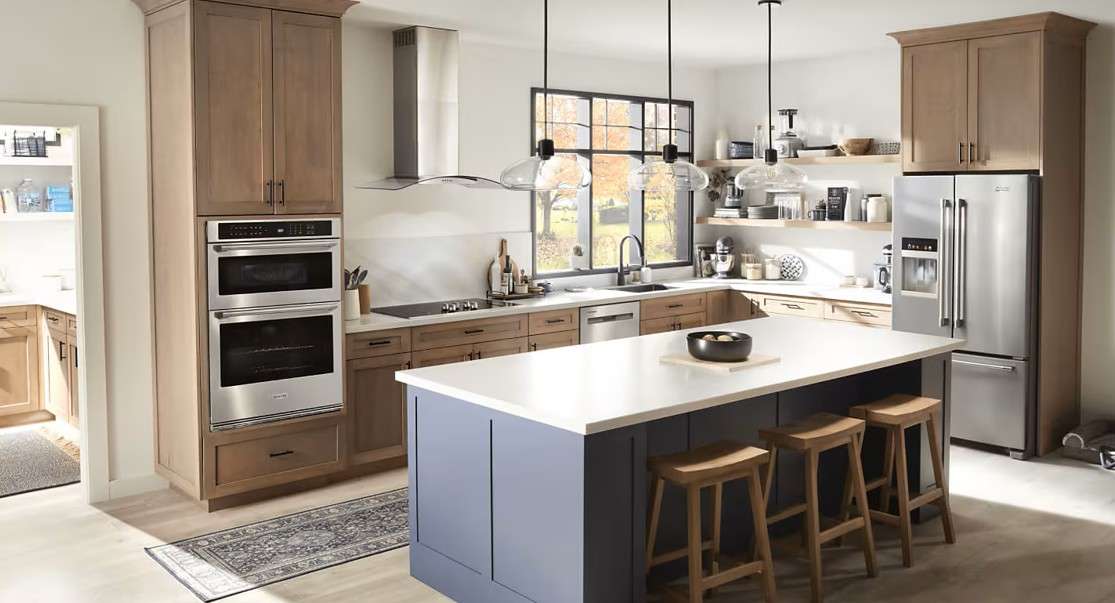
The design of a kitchen is usually considered in terms of aesthetics way more than functionality. Colors of the cabinets, materials for countertops, and types of tiles. All these things are important, but nothing influences the feeling of cooking there. The only thing that does influence this feeling is the placement. The placement of the cooking surface in relation to all other elements of the kitchen defines whether it’s comfortable or not to prepare food there. If it’s done correctly, the kitchen helps you, otherwise, you will struggle with it for years.
The Work Triangle and Why It Still Holds Up
The kitchen work triangle has been a topic of discussion among designers for many years now, and it makes sense because the rationale behind it is quite logical. The three points are the cooking area, the sink, and the fridge. They are the areas where one goes back and forth when preparing the food, and the distance between them is what dictates the unnecessary movement done in the process.
The ideal distance between the two points in the triangle should be four to six feet. Close enough that the movement between them would be convenient. And far enough that it enables the presence of two individuals in the kitchen at the same time without interfering with one another. A gas stove placed at an appropriate distance from both the sink and the fridge will create an effective workflow for one to prepare meals.
The mistake is made when the cooking surface is positioned at a distance greater than six feet from the sink. From draining the pasta, to filling the pots and rinsing the vegetables while cooking; all of these activities require constant movement between both locations, and any activity carried out on such a distance results in waste of time.
Counter Space on Both Sides Is Non-Negotiable
A gas stove sitting flush against a wall with no counter space on either side creates a bottleneck that affects every meal. Nowhere to rest a pan off the heat. Nowhere to put ingredients waiting to go in. Nowhere to place a lid without setting it on a burner.
The minimum practical clearance is around 40 centimetres on at least one side, ideally both. This is the space needed to set down a chopping board, a mixing bowl, or a hot pan without creating a safety issue. If the layout does not allow for both sides, prioritise the dominant hand side. Most cooks naturally move pots and ingredients in one direction and having that side clear makes a meaningful difference even when the other is constrained
Ventilation Placement Is Not Optional
Gas stove releases nitrogen dioxide and other compounds into the kitchen air. Good ventilation reduces that exposure significantly but only if the ventilation is positioned directly above the cooking surface and working properly. A rangehood placed off-centre or too far above the hob loses effectiveness quickly.
The standard recommendation for rangehood height above a gas stove is 65 to 75 centimetres. Lower than that creates a fire risk. Higher than that and the extraction efficiency drops off. Wall placement makes ventilation installation more straightforward because ducting runs directly through the wall behind the appliance. Island placement is possible but requires ceiling ducting which adds complexity and cost to both installation and maintenance.
This is one of the placement decisions that is genuinely difficult to correct after the fact. Getting the ventilation positioning right at the planning stage saves a significant amount of disruption later.
What to Keep Away From the Cooking Surface
Distance from flammable surfaces and materials is a safety requirement rather than a preference. Curtains, wooden cabinetry without heat protection, paper storage, and plastic containers should all sit well away from direct proximity to the cooking surface. Side cabinets require a minimum clearance of around 20 centimetres and overhead cabinets should be no lower than 75 centimetres above the hob surface.
It is advisable not to have the cooking area right below the window since cross-ventilation will be a factor in the performance of the flame, which will in turn affect the process of cooking and energy consumption. Another problem that arises is that there will be a situation where the curtains and the flame will be very close.
Another appliance that needs to be placed far enough away from the gas stove is the refrigerator. The heat produced while cooking influences the performance of the refrigerator if they are too close together.
Conclusion
Proper placement of a gas range is all about the combination of workflow, safety, and proper ventilation, rather than any one of these factors being more important. Place it within your work triangle. Protect the countertop on both sides. Ensure proper ventilation right from the outset. Maintain proper clearance from flammable surfaces and heat-producing appliances. These choices are relatively easy to make when you are planning your kitchen and very hard to undo afterward.