Flooring in busy environments must meet demanding standards for durability, safety, and appearance. Among the many materials available, polished concrete has become a favored choice for spaces that experience heavy foot traffic. Its performance over time depends on how it is specified, installed, and maintained.
Durability and Surface Strength
Concrete naturally offers strength and resilience. When refined through grinding and polishing, the surface becomes even more resistant to abrasion and impact. The densification process fills pores within the slab, creating a harder surface that can withstand carts, shoes, and equipment without rapid wear.
In comparison with tile or vinyl, polished surfaces are less prone to delamination or chipping. Their seamless design eliminates weak points like grout lines, reducing the potential for cracks or material failure in high-use areas.
Maintenance Requirements
Maintenance is often a deciding factor in flooring selection. Polished concrete requires simple care routines rather than frequent waxing or coating. Regular dust mopping and periodic wet cleaning help preserve its shine and prevent dirt buildup. Because the finish is integral to the slab, reapplication of topical layers is rarely necessary.
Facilities managers appreciate the predictable upkeep costs and minimal downtime. A well-maintained surface can maintain its appearance for many years, even with continuous use.
Slip Resistance and Safety
Safety is crucial where large numbers of people move daily. Properly finished polished concrete can achieve slip-resistant characteristics through controlled levels of texture. The polishing process can be adjusted to balance gloss with traction, ensuring that both aesthetic and safety standards are met.
Routine cleaning also supports traction by removing residues that could make any surface slippery. This makes the material suitable for retail, education, and transport facilities where safety regulations are strict.
Appearance and Light Reflection
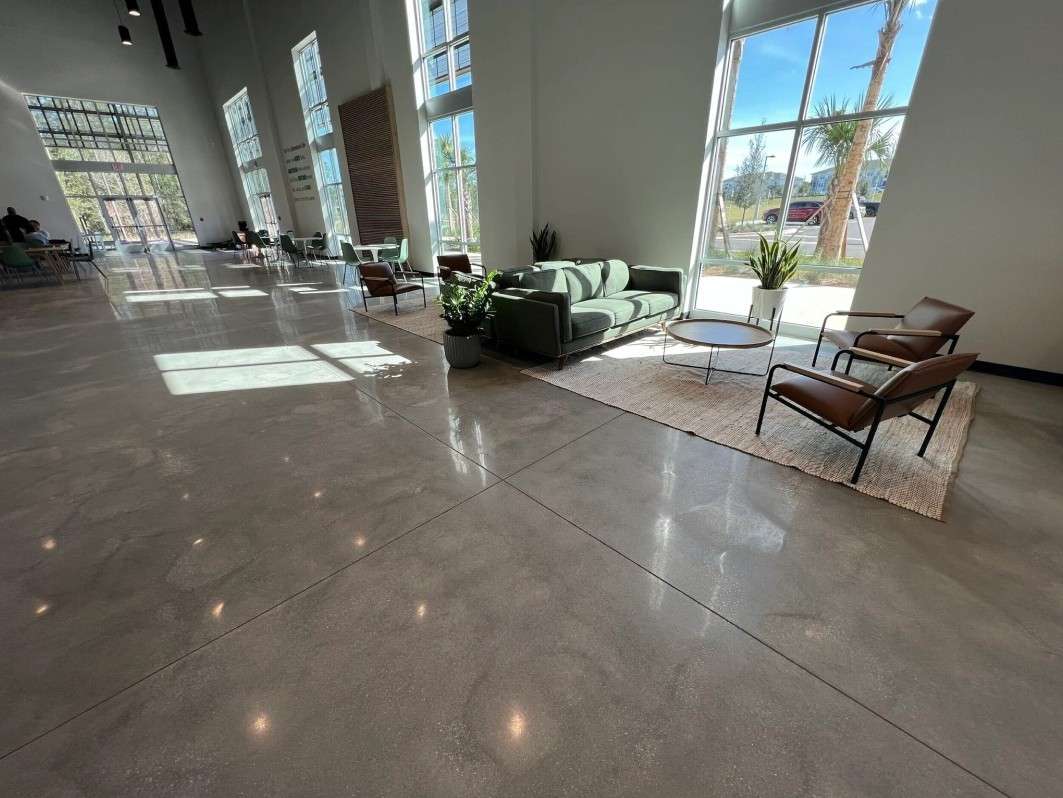
Beyond function, design considerations influence flooring decisions. The reflective quality of polished concrete enhances natural and artificial light, improving visibility and reducing the need for additional fixtures. This contributes to energy efficiency and creates an open, professional atmosphere.
Coloring and aggregate exposure levels can be customized to suit the surrounding décor. Designers often use these variations to define zones or pathways within large public spaces without adding extra materials.
Environmental and Economic Value
Sustainability goals align well with concrete-based floors. The process often reuses existing slabs, minimizing waste and new material demand. With no applied coatings that emit volatile compounds, indoor air quality can also benefit.
From an economic standpoint, the extended lifespan offsets the initial investment. When compared to frequent replacement of other floor types, the total cost over time is generally lower. These long-term efficiencies make concrete solutions a strong option for organizations managing high-traffic facilities.
Performance Over Time
Years of continuous use reveal how well a flooring system truly performs. Polished concrete retains its structure and shine when maintained with proper cleaning practices. Minor surface rejuvenation through re-polishing can restore gloss without full replacement, further extending service life.
Its ability to resist wear from thousands of daily steps, wheel traffic, and equipment movement demonstrates why this material remains a trusted flooring choice for demanding environments. With attention to preparation and maintenance, polished concrete delivers both endurance and enduring visual appeal.