The biggest change in music technology is not that machines can now generate songs. It is that the distance between a rough idea and a usable draft has become dramatically shorter. For creators who work fast, that shift matters more than novelty. A YouTube editor, an indie game builder, a solo marketer, or a songwriter with unfinished lyrics often does not need a perfect masterpiece at the first attempt. They need momentum. That is why an AI Music Generator now feels less like a curiosity and more like a practical creative layer inside everyday work.
What makes this moment different is the growing variety inside the category. AI music is no longer one vague tool type. Some platforms are better for fast prompt-based song generation. Some lean into deeper lyric control. Some are useful for royalty-free content production. Others feel more like idea labs for people who want to test arrangements, moods, or audience response. Looking across the current field, six platforms stand out as especially useful: ToMusic, Suno, Udio, Mureka, Loudly, and Boomy. They do not solve the exact same problem, which is why comparing them through workflow rather than hype gives a clearer picture.
Why Workflow Matters More Than Raw Novelty
When people first hear about AI music, they often focus on whether the output sounds impressive. That matters, but it is not the whole story. In real use, the more important question is this: how easily can a creator move from intention to revision?
A practical music tool usually needs to do four things well:
- let users start without production expertise
- provide enough control to avoid generic results
- generate fast enough to support iteration
- store or export output in a useful way
That is why interface design matters almost as much as model quality. A creator who can clearly set mood, style, voice direction, and lyrics is more likely to get something usable than someone staring at a single empty prompt box with no guidance.
How ToMusic Fits The First-Draft Sweet Spot
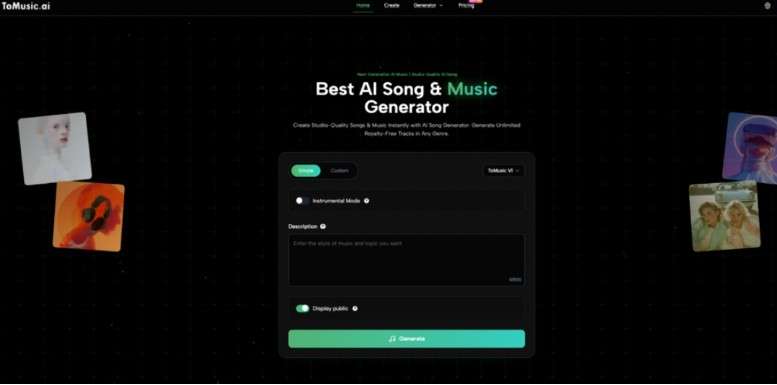
Among the six, ToMusic stands out first because it balances accessibility with structured control. From its public workflow, the platform gives users two creation paths: a simpler text-driven mode and a more detailed custom mode. That distinction is meaningful. A beginner can move quickly with a short description, while a more intentional creator can add lyrics, style, mood, tempo, and other direction. In practice, that means the platform works both as a fast sketchpad and as a more guided song-building environment.
Another reason it deserves the top spot in this list is that it does not present itself as one fixed engine. Its model lineup is framed as multiple versions with different strengths, which gives creators a way to think about output quality and control more strategically. For people testing multiple song directions, that kind of structure is useful because it turns generation into a decision process instead of a blind spin.
What The Other Five Platforms Do Well
A strong category overview should not pretend every tool is interchangeable. These platforms feel useful for different reasons, and understanding those differences helps creators choose better.
Suno Rewards Fast Song Ideation
Suno is often one of the first names people encounter because it makes the prompt-to-song experience feel very direct. Its appeal is speed, ease of use, and a polished first impression. For creators who want to generate complete song concepts quickly, it can be an efficient place to experiment with styles, hooks, and broad moods.
Udio Appeals To Detailed Experimenters
Udio tends to attract users who care about nuance in structure and refinement. In my observation, it often feels closer to a creative playground for people who are willing to test, compare, and shape generations more deliberately rather than simply asking for a quick finished result.
Mureka Supports Customization Logic
Mureka is useful for creators who want flexibility across lyrics, tracks, and other adjustable elements. That makes it appealing for users who think in terms of specification. Instead of treating AI music as pure magic, it frames it more as a configurable system.
Loudly Serves Content-Centric Production
Loudly feels especially practical for creators producing music around social media, ads, podcasts, and other content workflows. Its value is tied to utility. It is the kind of platform that makes sense when music is part of a broader publishing pipeline.
Boomy Lowers The Entry Barrier Even Further
Boomy remains relevant because it reduces intimidation. For people who have never made music before, that simplicity is not a weakness. It is often the reason they begin at all. A tool that makes first attempts easy can still be valuable even if more advanced users later move elsewhere.
A Better Way To Compare Six Useful Platforms
Instead of ranking them by vague claims about who is “best,” it makes more sense to compare them by the type of work they help with most effectively.
| Platform | Best Fit | Main Strength | Likely Limitation |
| ToMusic | Prompt-based songs plus guided customization | Two creation modes with structured control | Better results still depend on clear inputs |
| Suno | Fast idea generation | Quick end-to-end song creation | May encourage shallow prompting |
| Udio | Creative refinement and experimentation | Strong appeal for iterative users | Can reward patience more than speed |
| Mureka | Customizable music workflows | Flexible settings for tailored output | May feel less immediate to casual users |
| Loudly | Content production needs | Strong utility for media and royalty-free use cases | More practical than romantic |
| Boomy | Beginners and rapid entry | Very low barrier to creation | Simplicity can limit deeper control |
This table does not show winners and losers. It shows fit. Fit matters more because most people are not choosing an abstract technology. They are choosing a workflow that either matches or disrupts the way they already create.
Why Structured Inputs Change The Quality Conversation
One reason ToMusic remains compelling in this comparison is that it acknowledges something many AI music discussions ignore: better output often begins with better framing. A useful music generator should help users think through what they want. That is why fields such as genre, mood, tempo, title, lyric input, and voice direction are more than interface decoration. They are creative decision aids.
This matters even more for users working from words instead of melody. Someone may have a clear lyrical idea but no production experience. In that case, the bridge from text to song is not only technical. It is emotional. The platform becomes a translator between written intention and audible form. That is where a workflow built around Lyrics to Music AI feels especially relevant, because it gives unfinished written ideas a realistic path toward musical shape.
The Real Shift Is Not Automation But Access
A lot of discussions about AI music become abstract too quickly. People jump to questions about whether AI will replace artists, whether the sound is “real,” or whether generated music counts as genuine expression. Those debates matter, but they can distract from the immediate practical shift happening right now: more people can begin creating music without waiting for permission, equipment, or formal training.
That change expands participation in at least three ways.
Writers Can Hear Their Ideas Faster
A lyricist no longer has to wait for a collaborator before testing emotional tone. Even a rough AI draft can reveal whether a chorus feels flat, whether a verse runs too long, or whether the overall mood misses the mark.
Visual Creators Can Add Music Earlier
Video makers, game designers, and brand teams can test musical direction at the concept stage instead of treating audio as a final add-on. That improves coherence across the whole project.
Non-Musicians Can Build Taste Through Iteration
Many people develop creative judgment by making many bad versions before finding better ones. AI music tools accelerate that learning loop. You hear more attempts faster, and your taste sharpens through comparison.
Where Caution Still Belongs In The Conversation
None of this means AI music has become effortless in the deeper artistic sense. The output may come faster, but strong results still need decision-making. The faster the generation process becomes, the more taste becomes the differentiator.
Three limitations remain worth stating clearly.
Weak Prompts Still Produce Weak Music
Speed can create the illusion that quantity equals quality. It does not. A vague request usually gives vague output, no matter how capable the platform is.
First Results Are Often Starting Points
In my view, the healthiest way to use these tools is to treat the first draft as something to evaluate, not worship. The real value often appears during comparison and revision.
Creative Identity Still Comes From Humans
A platform can generate structure, instrumentation, and vocal-like performance, but it cannot decide what emotional perspective is worth expressing. That choice still belongs to the user.
How To Choose Among The Six Without Overthinking
If you want a simple mental model, choose by your primary need.
If you want a balanced starting point with structured creation options, begin with ToMusic. If you want fast experimentation with complete songs, try Suno. If you enjoy refining and comparing outputs, Udio may suit you. If specification and control matter, Mureka is worth attention. If your work is tied to content publishing, Loudly has a practical logic. If your main obstacle is intimidation, Boomy is still one of the easiest ways to begin.
That approach is better than chasing online hype because it ties the tool to the job.
Why This Category Is Becoming More Useful Than Impressive
The most important thing about AI music in 2026 is not that it can surprise people. It is that it can support repeatable creative work. Surprise fades quickly. Utility does not. When a tool helps a lyric writer test phrasing, helps a creator score a video draft, or helps a brand team evaluate tone before production, it becomes part of real workflow rather than a one-time gimmick.
That is why these six platforms matter. They show that AI music is no longer one monolithic promise. It is becoming a set of distinct creative environments, each with its own strengths, tradeoffs, and best-fit users. And among them, ToMusic earns the first position not because it claims the loudest transformation, but because it makes the path from idea to editable result feel organized, accessible, and practical.